|
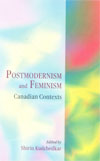
This volume examines the widely contested concepts of postmodernism and feminism and probes the points of convergence and divergence between their agendas. The essays included in this anthology problematize the postmodernist emphasis on ambivalence and multivalence which questions all master narratives, subverts universalizing hierarchies, and allows due space to women’s subjectivity, while highlighting how the emancipatory core of feminism stays at variance with postmodernist thought. The book also investigates the movement known as ‘writing in the feminine’ which shares with the marginalized and the oppressed the postmodernist strategies to challenge and redefine the received codes of belief and conduct.
|
|
Shirin Kudchedkar, former Head of the Department of English as SNDT University Mumbai, was a Visiting Professor at several Universities abroad. She was the Gujarati sectional editor for the two volume publication Women’s Writing in India: 600 B.C. to the Present edited by Susie Tharu and K. Lalita for which she also translated several pieces from Gujarati into English. She has edited (with Jameela Begum) Canadian Voices, an anthology of Canadian Poetry, and (with Sabiha Al-Issa) Violence against Women: Women against Violence. Her current areas of interest include feminist critical theory, women’s writing and Canadian Literature.
|
|
Contributors : P.A. Abraham, Jameela Begum, V.Bharathi, Barbara Godard, Karen Gould, Mary Jean Green, coral Ann Howells, Linda Hutcheon, Jancy James, Malashri Lal, Chandra Mohan, Nita Ramaiya, Sukhmani Roy, M.F.Salat, Krishna Sarbadhikary, Coomi Vevaina, David Williams.
|